
How Much Does It Cost to Pave a Parking Lot in Michigan?
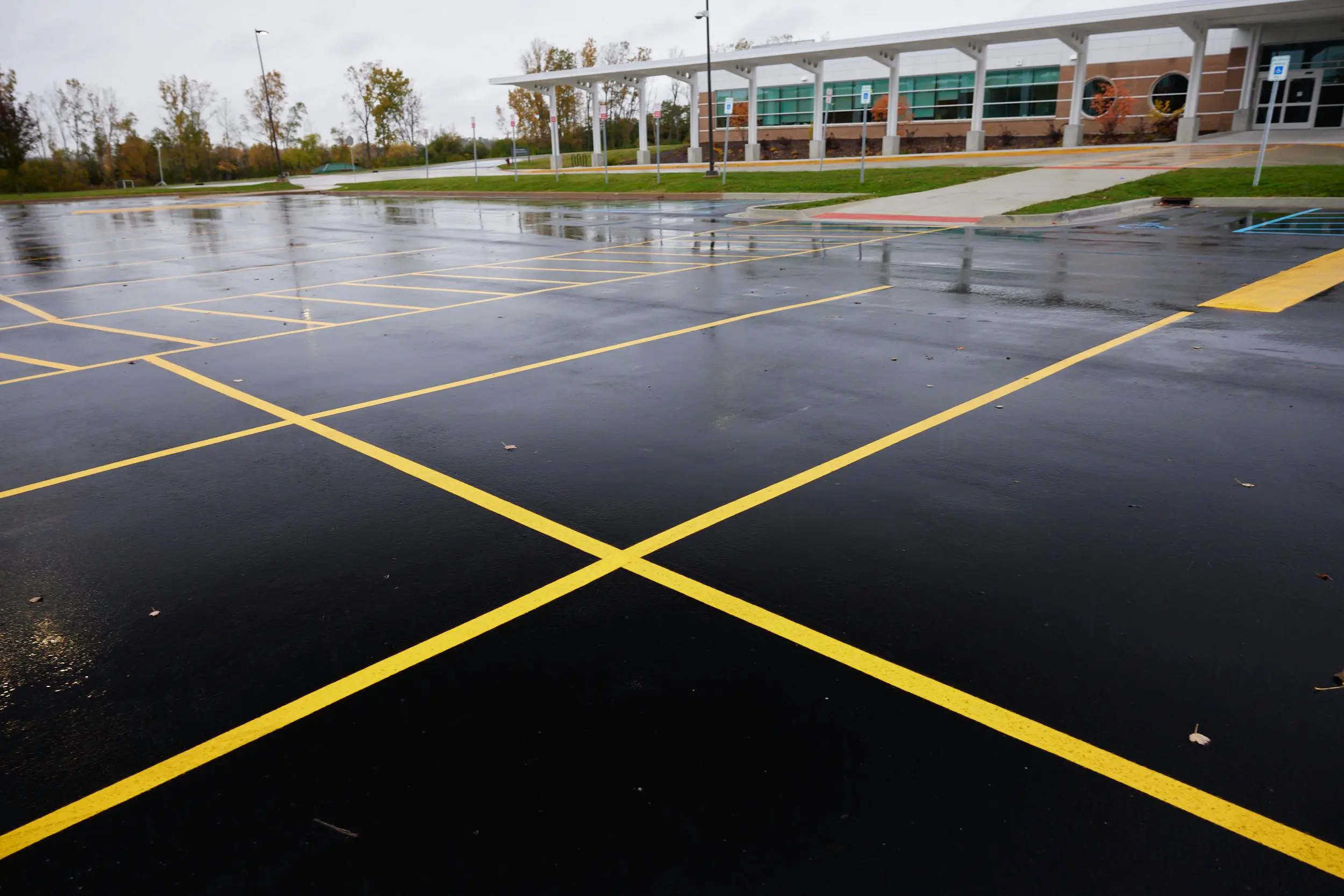
We hear this question more than any other. It usually shows up right after a customer trips over a heaved patch of asphalt, or right before a property manager has to present a project budget to people who would prefer the number be zero.
The honest answer is “it depends,” which might be the least satisfying phrase in the English language. So let’s make it useful. Below you’ll find realistic price ranges, what pushes a paving project up or down, and how long the entire process takes. That way you can walk into your first estimate ready to make informed decisions instead of just nodding along.
So, How Much Does Paving a Parking Lot Cost?
For a commercial parking lot in Southeast Michigan, asphalt paving typically runs between $2.50 and $7.00 per square foot for new construction. When a new parking lot needs everything done from the ground up (excavation, grading, drainage, and a fresh base), expect something closer to $5 to $10 per square foot.
|
Project Type |
Typical Cost Per Square Foot |
|---|---|
|
Asphalt paving on a prepared site |
$2.50 to $5.00 |
|
New commercial parking lot |
$2.50 to $7.00 |
|
Complete new lot with excavation, grading, and drainage |
$5.00 to $10.00 |
|
Asphalt overlay (resurfacing) |
$3.00 to $6.00 |
|
Concrete (basic installation) |
$4.00 to $7.00 and up |
|
Sealcoating |
$0.20 to $0.40 |
To put that in real numbers, a 10,000-square-foot parking lot usually lands somewhere between $25,000 and $45,000. That’s roughly 30 parking spaces once you count the drive aisles. Labor alone tends to account for about $1.50 to $2.00 per square foot. The rest comes down to materials, equipment, and whatever is happening underneath.
Size matters too. Larger projects usually catch a break on per-square-foot pricing, since mobilizing a crew and equipment costs roughly the same for 5,000 square feet as it does for 50,000.
Asphalt or Concrete?
Parking lots can be paved with either, and both have their place. Asphalt is generally less expensive and quicker to install, which is why it covers most commercial lots you drive through. Concrete costs more up front and takes longer to cure, but it holds up well in spots like dumpster pads, loading zones, and anywhere heavy trucks sit and turn.
Plenty of properties end up with both. Asphalt for the main lot. Concrete where the abuse is concentrated.
What Actually Moves the Number
Your parking lot paving cost comes down to several factors, and most of them get decided before the first load of asphalt arrives.
Site Preparation and Base Work
Site preparation often accounts for 20 to 30 percent of the total lot paving cost. That’s where the grading, leveling, excavation, and base preparation happen. It’s also the part nobody sees once the job is done.
Underneath every paved parking lot sits a compacted gravel base, and underneath that is whatever ground your property came with. Southeast Michigan has plenty of clay. Clay holds water, water softens the base, and a soft base turns fresh asphalt into a very expensive trampoline. If the soil can’t support the load, it has to come out and be replaced with stone. Sites that need heavy clearing or stabilization will cost more, which is why we’ll dig a test spot before we start guessing.
The Condition of Your Existing Pavement
An old parking lot with light cracking and faded paint is a very different project than one with alligator cracking, soft spots, and a pothole the regulars have started naming.
When the base is still solid, milling off the top layer and laying new asphalt over it saves a good chunk compared to full replacement. When the base has failed, an overlay just covers the problem for a season or two. A proper project evaluation tells us which situation you’re in. We’ll give you a straight answer, even when the less expensive option is the right call.
Drainage
Water is the reason most parking lots age before their time. Installing catch basins, storm drains, or regrading the surface adds real cost, and in some cases drainage issues can double the price of a paving project.
That sounds painful. It’s less painful than repaving the same sunken corner every few years. Proper drainage is where your money tends to deliver the best value, and in all our years, nobody has called to complain that their lot drains too well.
Traffic and Thickness
A standard asphalt layer runs about 2 to 4 inches thick. A lot designed for light use, like a small office or church, sits toward the thinner end. A commercial parking lot handling semis, garbage trucks, and fire lanes needs a thicker sub-base and deeper asphalt or concrete. More materials, more cost. Skimping here usually shows up later as ruts right where the trucks turn.
Striping, ADA Spaces, and Additional Features
Line striping, ADA-compliant stalls, curb ramps, signage, and wheel stops can add meaningful cost, so they belong in the estimate from day one. Paint is cheap. Repainting an entire lot because the layout didn’t work is not.
Depending on your municipality, permits, lighting, and landscaping requirements may also affect your project budget. We’ll help you account for those early so nothing surprises you halfway through.
Location, Labor, and Timing
Local labor rates and material availability shift from one area to the next, and asphalt prices tend to follow oil prices. Your quote and the evening news have more in common than you’d expect.
Access matters as well. A vacant lot we can close for a week is simpler than a busy retail center where customers still need to get in the door. Keeping a business open usually means working in phases, overnight, or on weekends. Very doable. It just needs to be scheduled and priced honestly from the start.
How Long Does Parking Lot Paving Take?
Less time than most people expect, with a couple of caveats.
Site preparation usually takes one to two days before any actual paving begins. A small parking lot may only need a couple of days of paving after that, while larger parking lots can take a week or more to complete, especially with excavation, base work, or drainage in the mix.
Once the asphalt is laid, the clock shifts to curing. Fresh asphalt can typically handle light traffic within 24 hours, and most lots are ready for regular driving within 24 to 48 hours. Heavy trucks should wait longer. In extreme heat, new asphalt stays soft a little longer and sharp turns can leave scuff marks, so we may ask you to give it an extra day. Concrete takes longer to cure than asphalt, so plan accordingly if your project includes both.
Striping and markings are among the final steps. They go down once the surface has had time to cure properly, and cutting proper curing short to get the paint on a day early is a trade nobody wins.
Weather conditions play a part too. Paving needs dry ground and cooperative temperatures, and a rainy week can push things back. Michigan’s asphalt plants generally run from spring through late fall, and the stretch with ideal conditions fills up fast. If you’re hoping to pave in October, don’t wait until October to schedule paving.
Where Saving Money Makes Sense (And Where It Backfires)
We genuinely enjoy helping clients stretch a budget. Some of the smartest savings come from phasing a large lot over two seasons, repairing isolated failed areas instead of replacing everything, or resurfacing while the base is still healthy.
The savings that come back to bite are the ones you can’t see. Thin base. Skipped compaction. A drainage problem nobody wanted to deal with. A lower bid that trims proper preparation usually sends the rest of the bill later, starting around the second spring.
When comparing contractors, ask each one to spell out thickness, base work, drainage, and exclusions. The lowest number on paper and the best value on the ground rarely come from the same bid.
Protecting What You Paid For
A well-maintained parking lot can last 20 to 30 years, and regular maintenance can roughly double its life compared to one that’s left alone.
Most pavement damage doesn’t occur immediately. It shows up slowly, one crack at a time. Sealing those cracks promptly keeps water from getting underneath. Sealcoating every two to three years protects the surface from sun, water, and road salt. Fresh striping keeps the lot safe and easy to read, and it doesn’t hurt your curb appeal either.
None of it is glamorous. It’s simply the cheapest way to push your next major paving bill further down the road.
One Point of Contact, Start to Finish
Plenty of paving estimates show up as a single number on a page. We prefer to walk the property with you, look at the site conditions, explain what we see, and put everything in writing so you know exactly what you’re paying for.
You’ll have one person to call for the entire process, so questions get answered by someone who actually knows your job. Sommerset is a family-owned paving contractor, and a good share of our work comes from property owners we paved for years ago who still have our number saved in their phone. We plan on keeping it that way.
Parking Lot Paving Across Southeast Michigan
We handle parking lot paving and maintenance for businesses, churches, schools, apartment communities, municipalities, and government facilities throughout Southeast Michigan, including the Metro Detroit area and surrounding communities. Small lot or large campus, you’ll get the same crew, the same communication, and the same attention to the details most people never notice until they’re missing.
Let’s Put a Real Number on Your Lot
Price ranges are a helpful place to start, but every lot has its own quirks. Schedule a free consultation and we’ll walk the site, talk through your goals, and hand you a clear written estimate with no mystery line items.
Frequently Asked Questions
How much does paving a parking lot cost per square foot?
Most new commercial asphalt lots in Southeast Michigan run $2.50 to $7.00 per square foot. Complete new construction with excavation, grading, and drainage often lands closer to $5 to $10. Site conditions and traffic have the biggest impact on where you fall.
How long does parking lot paving take?
Site preparation usually takes one to two days. A small lot may only need a couple of days of paving, while larger projects can take a week or more. Fresh asphalt typically handles light traffic within 24 hours.
Is it cheaper to resurface or replace a parking lot?
Resurfacing usually costs less, around $3 to $6 per square foot, because the existing base stays in place. It only works when that base is still solid. Widespread alligator cracking or soft spots usually mean replacement is the smarter call.
Can my business stay open while the parking lot is paved?
In most cases, yes. We can phase the work so part of the lot stays open, schedule around your busiest hours, or pave during evenings and weekends. We’ll map out the plan with you before the first truck arrives.
When is the best time to pave a parking lot in Michigan?
Late spring through early fall offers the most dependable weather conditions for paving. Schedules fill quickly, so reaching out during winter or early spring gives you the best shot at the timeframe you want.
How long does a paved parking lot last?
With regular maintenance, a properly constructed asphalt lot can last 20 to 30 years. Prompt crack sealing, routine sealcoating, and proper drainage do the most to stretch that lifespan before major repairs are needed.
Do I need permits to pave a parking lot?
Often, yes, especially for new lots or projects that change drainage, layout, or stall counts. Requirements vary by municipality, so we’ll help you understand what applies to your property before work begins.
Why do parking lot quotes vary so much between contractors?
Usually because they’re pricing different scopes. One quote might include base repair, drainage, and a thicker section while another leaves them out. Ask each contractor to spell out thickness, base work, and exclusions so you’re comparing the same project.